Satya
Satya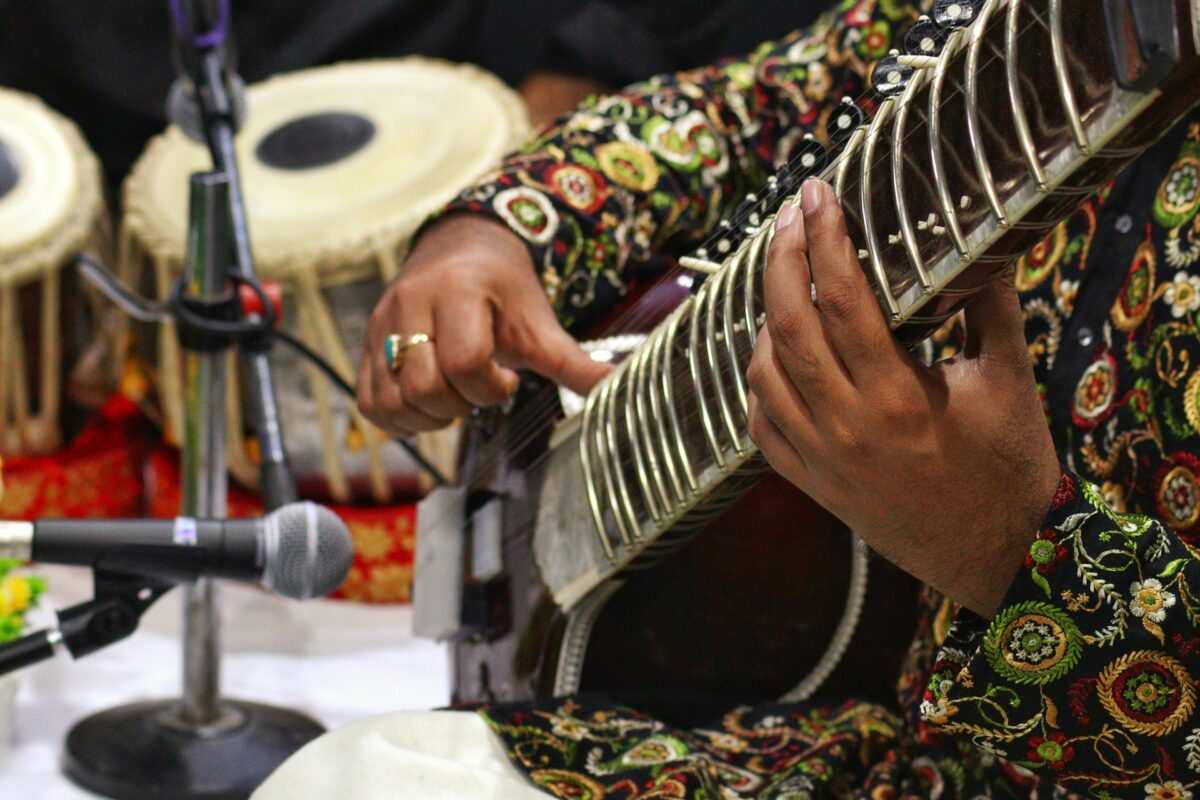
When we think of Indian music and instruments, emotions are intertwined with Indian music as well. For hundreds of years, traditional Indian musical instruments have helped to tell stories, to provide a way of showing devotion, to celebrate, and to perform with sounds that represent who we are as people. These instruments are unique in sound and history and reflect the personalities of their creators.
For those who are passionate about music, those who want to learn music for the first time, or even people who are interested in trying to learn music just for fun, understanding traditional Indian musical instruments will allow them to take their appreciation of Indian music to a much deeper level. The following are some of the most significant traditional Indian musical instruments, which we have presented in an easy-to-understand way.
Tabla
The tabla is one of the most used and well-accepted traditional Indian Musical Instruments. It is composed of two drums that are struck with the hands and fingers, which produces very complex rhythms.
Why the tabla is so important:
- It is widely used in all genres of Indian classical music and semi-classical music and is also used in Bollywood music.
- Tabla is famous for its unique rhythmic patterns called ‘taals’.
- Tabla can produce music that is soft, powerful, and even playful, depending on how you play it.
Due to the advances in technology today, institutions like Spardha School of Music offer online tabla lessons so that people can learn at their own pace. It also helps students to understand rhythm, and learn hand techniques and theory. Also, you are not restricted to learning tabla in a particular area, as you can take online classes from anywhere in the world.
The Bansuri(Flute)
The Bansuri is a flute made from bamboo and is one of the oldest musical instruments from India. It is known for its mellow and calming tones, but also for its emotive quality.
What Makes the Bansuri So Loved?
- The Bansuri has long been historically linked to Lord Krishna
- Bansuri is widely used in both Indian classical and Devotional music
- Playing the Bansuri helps develop one’s breath control and focus
The Sitar
The Sitar is a long-necked stringed instrument and has long been one of the most recognizable instruments in the Hindustani style of classical music. Being in the list of traditional Indian musical instruments, it has a very deep, dark sound and produces a powerful vibrating tone that evokes both strength and meditation.
What makes Sitar stand out?
- The Sitar is most widely performed in the Hindustani (North Indian) tradition.
- The Sitar is known internationally because of many world-renowned musicians.
- The Sitar is an instrument best suited for the serious practitioner interested in detailed exploration of Raga.
The Sitar demands lots of dedication and practice, but the sound produced from the Sitar will provide satisfaction for a dedicated learner.
The Veena
The Veena is a traditional stringed instrument that has been a major part of South Indian (Carnatic) music for many centuries. The instrument itself has a beautiful and elegant appearance, with a deep, warm, resonant sound.
What Makes the Veena so Significant?
- An Instrument with an Ancestor of Many Centuries Rx
- Connected to several different cultural and spiritual traditions
- Creates Rich and Expressive Melodies
- Teaches the Melodic, Disciplined, and Structured Elements of the Classical Tradition;
The Mridangam
The Mridangam is a double drum that has been a significant part of the Carnatic music tradition. During the performance of a Carnatic piece, the Mridangam serves a very important function as the Rhythmic Anchor.
Why is the Mridangam Such a Major Component of the Carnatic Rhythmic Tradition?
- Required for all South Indian Classical Music Concerts;
- Associated with Very Complex Rhythmic Patterns;
- Hand Co-ordination must be developed to play the Mridangam well;
- An Integral Part of the Rhythmic Foundation of Carnatic Music.
Harmonium
The harmonium is another traditional Indian musical instrument which is a keyboard-based instrument widely used in bhajans, ghazals, and classical practice sessions.
Why harmonium is popular:
- Easy to learn for beginners
- Supports vocal practice
- Commonly used in group performances
It’s often the first instrument many learners start with before moving to advanced classical instruments.
Why Learning Traditional Indian Instruments Still Matters
In today’s fast-paced world, Traditional Indian Musical Instruments offer something rare, patience, focus, and emotional balance. Learning these instruments improves concentration, discipline, and creativity.
Thanks to digital platforms, learning music is now more accessible than ever. Whether it’s online tabla lessons or learning flute online, students can connect with skilled teachers from anywhere and learn at a comfortable pace.
Begin Your Musical Journey with Spardha School of Music
If reading about these instruments has inspired you to start learning, the right guidance makes all the difference. Spardha School of Music offers structured online music education for Indian classical instruments, making learning accessible, engaging, and effective.
From rhythm-based instruments like tabla to melodic ones like the flute, Spardha School of Music provides expert teachers, flexible schedules, and a strong focus on fundamentals. Whether you’re a beginner or looking to refine your skills, their programs support steady growth and confidence.
Indian music is timeless. With the right training and dedication, you can become a part of this beautiful tradition, one note at a time.