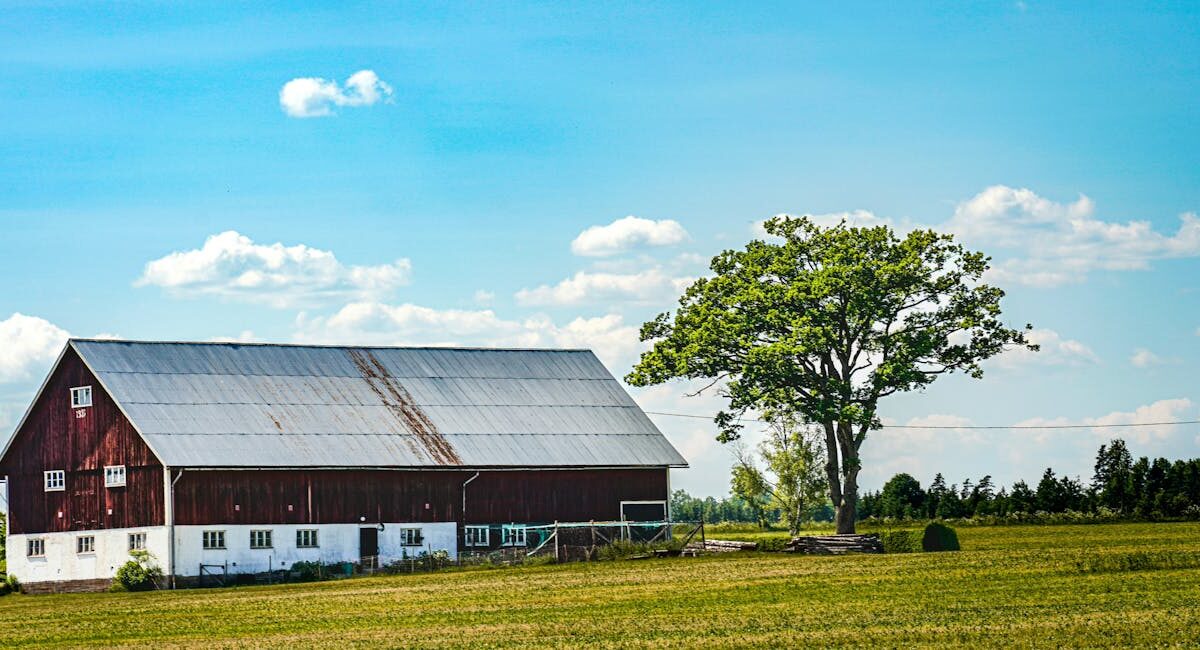
Winter on a farm is a time of silence. The fields are no longer producing crops, the animals are kept inside, and other farm equipment is stored safely away. When looking at objects like large tractors, rotavators, or combine harvesters, many farmers have to face the fact that these expensive tools require specialist storage, and it can be hard to find structures large and stable enough to store them safely during the rains and snow of winter.
This has led to a call back to more traditional barn structures on a farm, and here, you will be guided through what you need to know about these structures and how they can benefit you and your farmland.
What are Pole Barns?
When most people think of pole barns, they think of the buildings that originated in the 1920s and 1930s. This was when farmers needed a cost-effective way to build barns, using the materials that they had to hand, such as surplus utility poles.
Today, pole barns are still widely used and built for their cost saving appeal and ease of construction. While on a farm, they might primarily be used to store larger equipment, or for stables, pole barns are also being used as commercial properties or as smaller residential properties.
Amish pole barns have a post-frame structure that is built using large posts that are embedded into the ground, offering wide open interior spaces without the traditional foundations needing to be built. Unlike traditional stick-frame buildings, a pole barn does not require an interior load-bearing wall, which allows for the storage of larger farm objects, such as bales of hay and tractors. The posts are usually buried 4 to 6 feet into the ground and are connected via horizontal girts.
So, if you are lucky enough to own a large piece of land or a farm, why should you potentially invest in a pole barn?
Cheaper
Unlike a standard barn, a pole barn is cheaper to put up due to its lack of a hardy foundation and lack of specialist materials to build. In simple terms, most pole barns are made from wood, which is easier to cut and shape than a building made from multiple materials.
As mentioned earlier, the majority of these barns are erected using wooden poles, and while there are options to have specialized shapes built for specific farm equipment, the standard pole barn has a rectangular shape, allowing for easy storage of most of the tools that a farm will use.
Versatile
Combine harvesters, tractors, and other farming equipment are huge, and with the more modern structures, this can cause a bit of tension when trying to get them out during the spring from sowing season.
A pole barn allows you to store everything from hay to machinery with lots of wiggle room, meaning that there is less chance of accidents occurring or equipment becoming damaged. Plus, many farms use their pole barns to store perishables, and the hardy structure and airtight design prevent vermin from eating or damaging harvested crops.
Durable
Granted, pole barns are made from wood, which will require some upkeep, but this is minimal compared to other structures available. A pole barn is unlikely to be blown over in a windstorm, it can withstand torrential rain and is airtight, and it can also manage freezing winter, whilst protecting everything inside and keeping the temperature stable.
Of course, some farmers choose to turn their pole barns into stables or winter areas for livestock, such as pigs, cows, and chickens. For this, it is recommended that you add some insulation and a suitable heater to keep the temperature high enough for the animals to stay healthy.
Energy Efficient
It is airtight, it is made from natural materials, and if you need electricity, you can install a solar panel on top with minimal adjustments.
Pole barns offer maximum energy efficiency due to their minimal waste design and build, especially when they are built professionally, and they will require minimal insulation to keep them heated.
Faster Build
For a metal barn to be erected on a farm for storage or livestock holding, it can take months to erect the internal structure and fit the exterior correctly, especially if it is being done with a bit of DIY.
With a pole barn, if you have it erected professionally, you will likely have a wait of between five and seven days. This reduces the chance of any farm equipment getting damaged while you wait for it to be put up. You should note that this may vary slightly based on how many people are putting the barn up, its size, its location, and the time of year it is being put up.
Making the Right Choice for your Farm or Land
Farmers across the land face legitimate challenges when it comes to keeping their equipment in good condition outdoors. Pole barns are one of the most cost-effective options that address the need to have a wide-open space inside the barn, without spending a lot of money. Depending on the size of the barn that you have built, you may find that the cost is more manageable and the benefits extend far beyond having a space to put the tractor.
The decision for you to invest in a pole barn should be based on your farm’s needs and vulnerabilities. If you have a lot of equipment that has nowhere to be stored safely, then opting for a large pole barn is going to benefit you greatly, and as these structures have long lives, they will provide a stable place for your farm equipment for many years to come.
Even though pole barns do not require a lot of maintenance, you should still check the base materials of any barn that you buy to ensure that any weather-proofing, maintenance, or repairs can be done easily by you, a member of your family, or a member of your staff, should the need arise.
YOU MAY ALSO LIKE