What Is Mirabilis jalapa (Four O’Clock Flower)
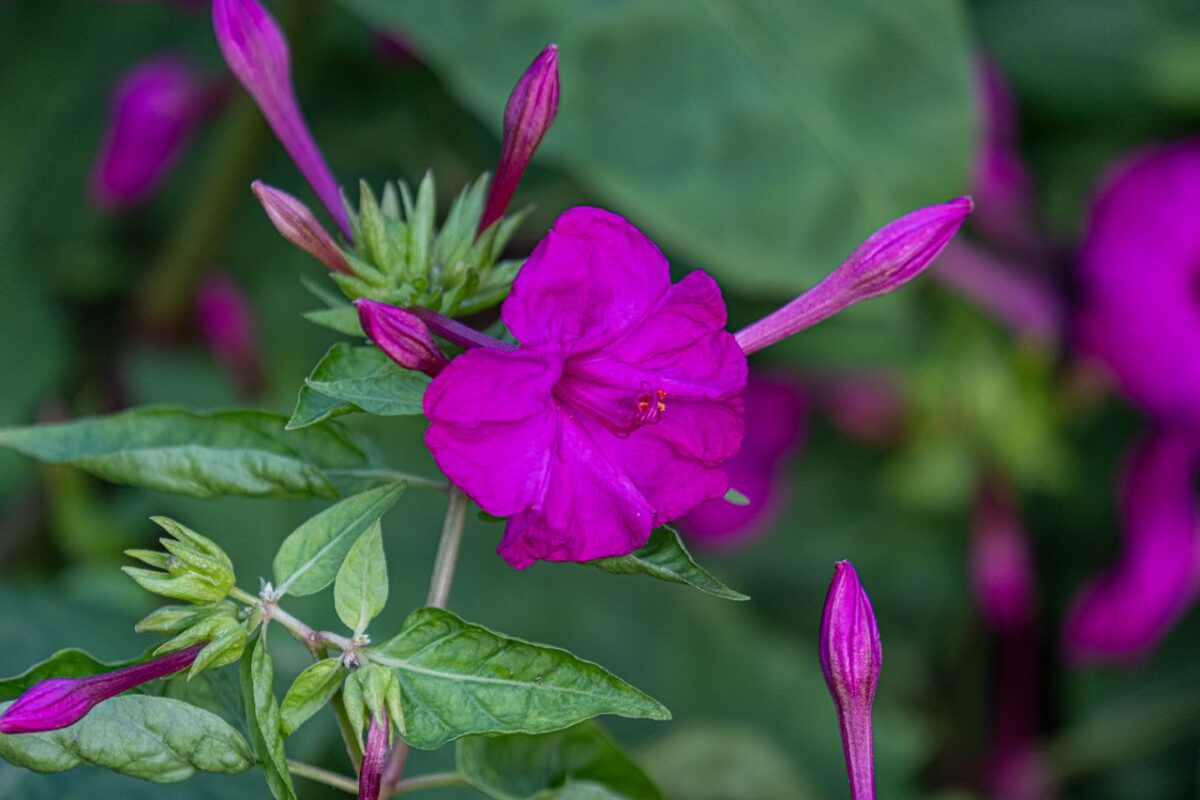
Mirabilis jalapa, commonly known as the four o’clock flower, is a perennial flowering plant best known for its vibrant, trumpet-shaped blooms that open in the late afternoon—hence its common name. Native to tropical and subtropical regions of the Americas, it is now widely grown around the world as an ornamental garden plant due to its hardiness, colorful flowers, and pleasant fragrance.
Botanically, Mirabilis jalapa belongs to the Nyctaginaceae family. The plant typically grows 2–3 feet tall (about 60–90 cm) with bushy, branching stems and oval, pointed leaves of a rich green color. One of its most distinctive features is the incredible variety of flower colors it can produce, often on the same plant. You may find blooms in shades of pink, red, yellow, white, and magenta, as well as striped or speckled combinations. Sometimes a single flower can even show two or more colors, giving it a uniquely decorative appeal.
The flowers usually remain closed during the brightest hours of the day and open in the late afternoon or early evening, releasing a sweet, jasmine-like scent that attracts moths and other night-flying pollinators. In warmer climates, Mirabilis jalapa can behave as a true perennial, resprouting each year from tuberous roots. In cooler regions, it is often grown as an annual or lifted and stored over winter.
Botanical Profile and Origin of Mirabilis jalapa
Mirabilis jalapa, commonly known as the four o’clock flower or marvel of Peru, is a perennial flowering plant valued for its vibrant colors and unique blooming habits. Belonging to the Nyctaginaceae family, it typically grows 30–90 cm tall, forming bushy clumps with smooth, branching stems. The leaves are opposite, ovate to heart-shaped, with a soft, slightly fleshy texture and prominent veins, giving the plant a lush, ornamental appearance.
One of the most distinctive traits of Mirabilis jalapa is its trumpet-shaped flowers, which usually open in the late afternoon—hence the name “four o’clock flower”—and remain open through the night, closing again in the morning. The flowers come in a wide range of colors, including pink, yellow, red, white, and magenta, and it is common to see different colors on the same plant. Some individual flowers are even bi-colored or speckled, showing stripes or patches of contrasting shades. This natural variation is the result of genetic instability in the pigments, which makes the species especially interesting to horticulturists and plant enthusiasts.
Botanically, what appear to be single flowers are actually expanded, petal-like structures formed from fused calyces, a characteristic feature of the Nyctaginaceae family. After flowering, Mirabilis jalapa produces small, hard, single-seeded fruits that are usually black and wrinkled when mature. These seeds germinate readily, allowing the plant to self-sow and re-establish each season, even in regions where it is grown as an annual.
Mirabilis jalapa is native to tropical regions of the Americas, with its origin most commonly attributed to the Andean areas of Peru. From there, it was spread by early Spanish and Portuguese explorers and traders in the 16th century, quickly becoming popular in European gardens as an exotic ornamental. Over time, it naturalized in many warm and subtropical parts of the world, including Asia, Africa, and the Mediterranean, where it is now a familiar garden and roadside plant.
Today, Mirabilis jalapa is cultivated globally for its ease of growth, tolerance of poor soils, and striking evening display. In some places it is considered a minor invasive species because of its vigorous self-seeding and robust root system, which forms thick, tuberous roots capable of surviving adverse conditions. Nonetheless, in most garden settings it remains a manageable and rewarding ornamental, appreciated not only for its beauty and fragrance but also for its cultural history as the “marvel of Peru,” a plant that has traveled widely while retaining strong ties to its South American origins.
Colors, Fragrance, and Blooming Habits
One of the most charming mirabilis jalapa characteristics is its astonishing range of colors. Commonly known as the four o’clock flower, this plant can produce blooms in solid shades of pink, red, yellow, white, and magenta. What makes it truly distinctive, however, is its tendency to develop bi-colored flowers. On a single plant, you might see petals splashed, striped, or mottled with two or more hues, creating a variegated, almost hand-painted appearance. Sometimes different mirabilis jalapa colors even appear on the same stem, giving the plant a playful, unpredictable look in the garden.
Mirabilis jalapa is also prized for its fragrance and unique blooming rhythm. The flowers are fragrant night-blooming flowers, releasing a sweet, gently intoxicating scent as daylight fades. As one of the classic evening-blooming plants, its blossoms usually unfold around late afternoon—hence the common name “four o’clock,” referring to its typical four o’clock blooming time. The blooms remain open through the evening and into the night, attracting moths and other nocturnal pollinators, and then close again by the next morning.
These mirabilis jalapa characteristics—vibrant and often bi-colored flowers, a strong evening fragrance, and a reliable four o’clock blooming time—make the plant especially valuable in night or twilight gardens. It brings both color and scent to the hours when many other plants have already closed their blossoms, extending the sensory interest of the garden well beyond daylight.
Growing Conditions: Climate, Soil, and Sunlight Requirements
Mirabilis jalapa growing conditions are generally warm and moderately dry. It thrives in regions with mild to hot summers and can be grown as a perennial in frost-free or warm-temperate climates, and as an annual in cooler regions. In terms of mirabilis jalapa temperature tolerance, the plant prefers daytime temperatures between about 18–30°C (65–86°F). It can handle short periods of higher heat once established, especially because it is naturally one of the more drought-tolerant flowers, but young plants will need regular watering until their roots develop. Frost, however, is a concern. Light frosts may damage the foliage, and hard frosts can kill the plant back to the ground. In colder climates, some gardeners lift and store the tuberous roots over winter or mulch the soil heavily to protect them.
Soil plays a key role in the health and flowering of Mirabilis jalapa. The ideal soil for mirabilis jalapa is well-drained, moderately fertile, and slightly loose in texture. Sandy loam or loamy soil enriched with organic matter works very well. Heavy, compacted clay tends to hold too much water around the roots and can lead to rot, particularly in winter or during prolonged wet spells. If your soil is dense, improve drainage by mixing in compost, coarse sand, or fine gravel before planting. While Mirabilis jalapa is not overly demanding about soil pH, it generally does well in neutral to slightly alkaline conditions. Avoid extremely acidic or waterlogged sites, as they can limit growth and flowering.
Sunlight requirements are another essential part of learning how to grow mirabilis jalapa successfully. This plant blooms best in full sun, meaning at least 6 hours of direct light each day. In hotter regions, it can also do well in light afternoon shade, which can help protect the flowers and foliage from stress during peak summer heat. Too much shade may result in fewer blooms and more leggy growth, so if you must plant in a partially shaded spot, choose one that still receives bright morning sun.
Once established in the right climate, soil, and light, Mirabilis jalapa is remarkably low maintenance. Its combination of good mirabilis jalapa temperature tolerance in warm regions, preference for well-drained soil, and relatively modest watering needs makes it a reliable choice for gardeners seeking colorful, drought-tolerant flowers. By matching its natural preferences as closely as possible, you will encourage strong growth, abundant evening blooms, and a resilient plant that can return and thrive year after year in suitable climates.
Planting Mirabilis jalapa: Seeds, Tubers, and Propagation Methods
When propagating Mirabilis jalapa from seed, start with fresh, mature seeds for the best seed germination rates. Sow mirabilis jalapa seeds indoors 4–6 weeks before the last expected frost or directly in the garden after the soil has warmed. The seeds have a hard coat, so gently nicking them with a file or briefly soaking them in warm water can help speed germination. Plant the seeds about 0.5–1 cm deep in well-draining soil, keep the medium evenly moist but not waterlogged, and provide warmth and light. Under suitable conditions, seed germination usually occurs within 1–3 weeks.
Mirabilis jalapa tubers offer a faster route to established plants. As the plant matures, it forms fleshy, carrot-shaped tuberous roots that store energy. In mild climates, these mirabilis jalapa tubers can overwinter in the ground and re-sprout in spring. In colder regions, gardeners often dig them up after the first frost, store them in a cool, dry place, and replant them when the risk of frost has passed. To plant tubers, set them in loose, well-drained soil about 5–10 cm deep, with the growing points facing upward, and water lightly until new growth appears.
Dividing tuberous roots is another efficient way of propagating Mirabilis jalapa. This method is best done in early spring, before vigorous growth begins. Lift the clump of tubers carefully and brush off excess soil. Use a clean, sharp knife or pruning tool to cut larger tubers into sections, making sure each division has at least one visible bud or “eye.” Allow cut surfaces to dry and callus for a few hours in a shaded spot to reduce the risk of rot. Then replant each section as you would an intact tuber, spacing them so that the mature plants have room to spread.
Whether you choose to start from seeds, plant stored tubers, or focus on dividing tuberous roots, understanding these propagation options makes it easier to decide how to plant four o’clock flower in your space. Combining seed-grown plants, which may vary in color, with tuber divisions, which reliably replicate favorite blooms, can give you a diverse and long-lasting display year after year.
Care and Maintenance: Watering, Fertilizing, and Pruning
Caring for Mirabilis jalapa, or four o’clock plants, is straightforward, which makes them ideal low-maintenance flowering plants for busy gardeners. With a simple watering schedule, occasional feeding, and light pruning, you can keep them blooming beautifully all season.
When it comes to mirabilis jalapa care, consistent but moderate watering is key. These plants prefer well-drained soil and can tolerate short dry spells once established. Water deeply when the top inch of soil feels dry, usually about once or twice a week in warm weather. In very hot or windy conditions, you may need to increase the frequency, while in cooler or rainy periods, you can scale back. Avoid waterlogged soil, as overly wet conditions can lead to root problems and reduced flowering.
Fertilizing four o’clock plants is usually a simple part of your routine. In average garden soil, they often need only a light boost. Work a balanced, slow-release fertilizer into the soil at planting time to support healthy growth. During the growing season, you can supplement with a diluted liquid fertilizer once a month if plants look pale or growth seems slow. Avoid over-fertilizing with high-nitrogen products, as this can produce lots of leaves at the expense of flowers.
Pruning mirabilis jalapa is minimal but helpful for keeping plants tidy and encouraging continuous blooms. Regularly remove spent flowers and any yellowing or damaged leaves to direct the plant’s energy into new growth and buds. If the plants become leggy or overgrown, you can lightly trim back the stems to maintain a compact shape. At the end of the growing season, in colder climates, the above-ground growth will die back; you can cut it down to soil level and either lift the tuberous roots for storage or leave them in the ground where winters are mild.
Landscape Uses: Mirabilis jalapa in Gardens and Containers
Mirabilis jalapa, often called four o’clock flower, is remarkably versatile in ornamental garden design and works well in both ground beds and pots. In mirabilis jalapa landscaping, its bushy habit and profusion of blooms make it an excellent choice for filling empty spaces, softening hard edges, and adding a relaxed, cottage-style charm.
As a border plant, Mirabilis jalapa forms low to medium-height mounds that create a colorful edge along paths, driveways, and garden beds. Planted in a row, the plants can define garden rooms or frame a vegetable patch, while their evening blooms add interest at a time when many other flowers are closing. They pair especially well with other cottage garden flowers such as cosmos, zinnias, and marigolds, which share a similar informal, cheerful character.
Container gardening with Mirabilis jalapa is a practical option for patios, balconies, and small yards. Grown in pots, the plants can be moved to showcase their color where it’s most visible in the late afternoon and evening. Deep containers allow the tuberous roots to develop well, and combining Mirabilis jalapa with trailing plants or foliage accents can create attractive mixed planters. Containers also help contain the plant’s tendency to reseed, which is useful if you prefer a more controlled backyard flower display.
For backyard flower ideas, consider using Mirabilis jalapa as a focal point in an evening seating area, mixing several flower colors in one bed, or mass-planting it behind lower annuals for a layered effect. Whether used as border plants, in containers, or woven through a cottage-style planting scheme, Mirabilis jalapa offers long-lasting color, fragrance, and a flexible form that adapts easily to many garden designs.
Mirabilis jalapa in Traditional Medicine and Cultural Uses
Mirabilis jalapa, commonly known as the marvel of Peru or four o’clock flower, has a long history of use in traditional medicine across Latin America, Asia, and parts of Africa. In many regions, it is considered one of the important folk medicine plants, valued both for its beauty and its practical benefits.
Among the best-known mirabilis jalapa medicinal uses are its applications for minor inflammatory conditions and digestive issues. In some traditional systems, the roots are prepared as decoctions to support the treatment of mild stomach discomfort, constipation, or intestinal parasites, while poultices made from the leaves are placed on the skin to soothe small wounds, insect bites, and localized swelling. These herbal uses are usually based on simple home preparations, such as crushed fresh leaves, teas, or pastes mixed with oil or water. Because potency can vary and scientific studies are still limited, such marvel of Peru traditional remedies are typically passed down through community experience rather than formal medical guidelines.
Toxicity, Safety, and Common Pests or Diseases
Mirabilis jalapa is considered mildly poisonous if ingested. The roots and seeds, in particular, can cause gastrointestinal upset, such as nausea, vomiting, or diarrhea, when eaten in quantity. Gardeners often ask, “Is Mirabilis jalapa poisonous to pets?” While it is not typically classified among the most dangerous plants, ingestion by cats, dogs, or other small animals can still lead to discomfort and may require veterinary attention. For a truly pet-safe garden, it is best to plant Mirabilis jalapa where curious animals are less likely to chew on it, or opt for clearly pet-safe garden plants instead if your pets are prone to nibbling on foliage.
In terms of plant health, common pests on Mirabilis jalapa are usually those found on many other ornamental species. Aphids, whiteflies, and spider mites may appear, especially in warm, dry conditions. These insects feed on plant sap, which can lead to distorted growth, yellowing leaves, and sticky honeydew residue that sometimes encourages sooty mold. Regularly inspecting the undersides of leaves, using a gentle stream of water to dislodge pests, and introducing beneficial insects like ladybugs can help keep populations under control. For heavier infestations, targeted garden pest control methods such as insecticidal soap or horticultural oils can be effective when used according to label directions.
Mirabilis jalapa is generally resilient, but it can still be affected by certain plant diseases. Fungal issues like powdery mildew may develop in humid climates or when air circulation is poor, showing up as a white, powdery coating on leaves. Overly wet soil and poor drainage can also lead to root rot and other fungal problems. To minimize disease risk, plant Mirabilis jalapa in well-draining soil, avoid overhead watering when possible, and space plants to allow air to move freely between them. Removing and disposing of heavily infected leaves helps prevent the spread of pathogens.
How to Collect and Save Mirabilis jalapa Seeds
Saving Mirabilis jalapa seeds is one of the easiest and most rewarding ways to keep your four o’clocks blooming year after year. With a few simple seed collection tips, you can build a supply for replanting, sharing, or experimenting with new color combinations in your garden.
Start by identifying mature seeds on your plants. After the flowers fade, they form small, round seed pods that turn dry and black when ready. This is the ideal stage for saving Mirabilis jalapa seeds. Gently pinch or twist the dry pods to release the seeds into your hand. Avoid collecting seeds that are still green or soft, as their seed viability is usually lower and they may not store well.
Once collected, spread the seeds in a single layer on a paper towel or plate in a dry, shaded spot for several days. This extra drying step helps prevent mold and ensures better long-term viability. When the seeds are fully dry, you can move on to storing four o’clock seeds properly. Use paper envelopes, small paper bags, or labeled seed packets instead of plastic, which can trap moisture. Store them in a cool, dark, and dry place—such as a drawer, box, or closet—away from temperature swings and humidity. Under good conditions, Mirabilis jalapa seeds often remain viable for several years, though it’s best to use the oldest seeds first.
Seed sharing is a natural extension of saving your own seed. Because Mirabilis jalapa cross-pollinates easily, seeds from one plant may produce surprising new colors and patterns. Label your packets with the year and any notes about the parent plant (e.g., “yellow with pink streaks”), then share them with friends, local gardening groups, or seed swaps. This not only spreads the joy of four o’clocks, it also helps preserve genetic diversity in home gardens.
Growing Mirabilis jalapa from saved seed is straightforward. In spring, you can start seeds indoors a few weeks before your last frost date or sow them directly outdoors once the soil has warmed. Lightly scarifying the hard seed coat with sandpaper or nicking it gently with a knife can speed germination. Plant the seeds about ½ inch deep in well-drained soil and keep them evenly moist until they sprout. With proper care, your saved seeds will grow into healthy four o’clock plants, closing the loop from one season to the next and giving you a sustainable, cost-effective way to enjoy these fragrant evening blooms every year.