Satya
Satya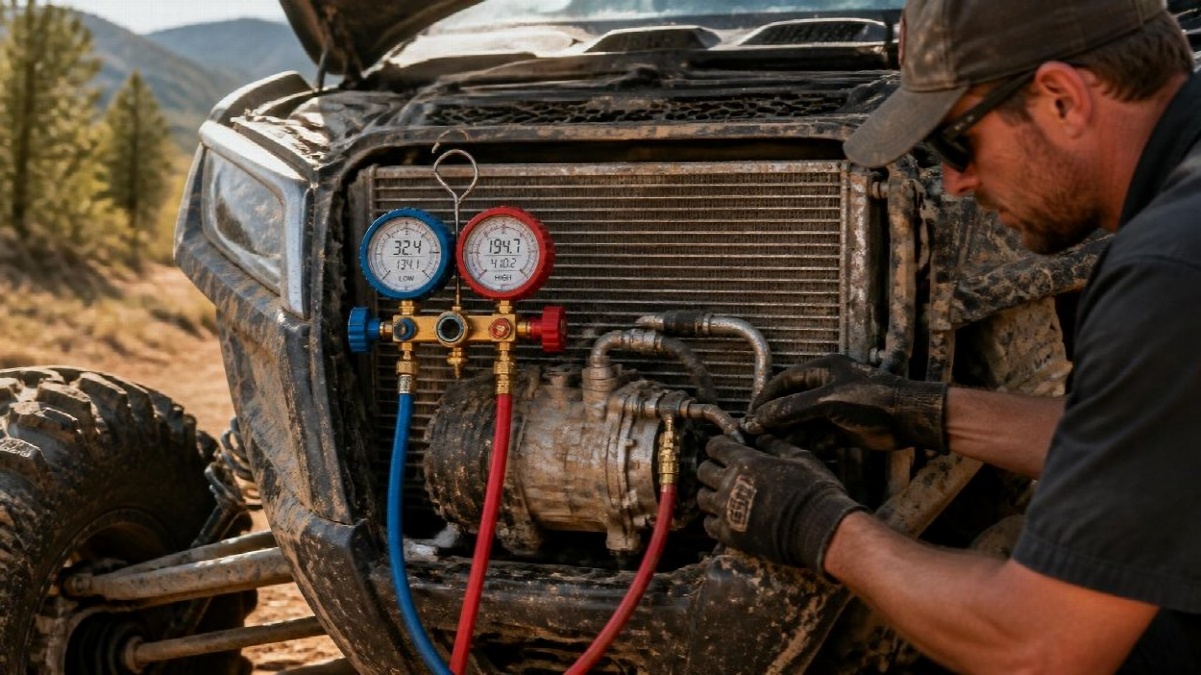
The frustration is real on a hot day: you start your off-road machine’s air conditioning, the fan blows, but the air coming out is warm. The good news is that a running fan means part of your system is working, which significantly narrows down the potential problems. A lack of cold air when the fan is on usually points to a specific issue within the AC’s refrigeration cycle. This guide will walk you through the five most common reasons this happens and how you can confidently diagnose the problem.
What Happens When the Fan Works But the AC Is Warm?
Your vehicle’s climate system contains two distinct systems. The first is the blower fan, which pushes air through the vents. The second is the AC system, a refrigeration loop that actively cools that air. When the fan works, but the air is warm, it confirms the refrigeration loop is not doing its job. The issue lies somewhere between the compressor, the refrigerant, and the components that manage heat.
5 Reasons Your AC Blows Warm Air
Let’s explore the most likely culprits, starting with the simplest and most frequent issues.
1. Why Low Refrigerant Is the Top Suspect
The most common reason for an AC system to stop cooling is low refrigerant. Refrigerant is the essential fluid that absorbs heat from the cabin and releases it outside. Since your AC is a sealed system, low levels almost always indicate a leak. Without enough refrigerant, the system cannot generate cold air, and a built-in low-pressure safety switch will often prevent the compressor from turning on to avoid damage.
2. How to Tell If the Compressor Clutch Is Engaging
The AC compressor is the heart of the system, engaged by an electromagnetic clutch. When you turn the AC on, you should hear a distinct “click” from the engine bay as the clutch engages and spins the compressor. If you hear the fan but do not hear that click, the compressor is not running. This points to an electrical issue, a failed clutch coil, or the low-refrigerant problem mentioned above.
3. Is Your Condenser Blocked or Its Fan Failing?
The condenser is a large radiator at the front of your machine that releases heat from the refrigerant. On an off-road vehicle, it is extremely common for the condenser fins to become clogged with mud, dust, and debris. A blocked condenser cannot cool the refrigerant effectively, crippling the system’s performance. Some machines also use a dedicated electric cooling fan to pull air through the condenser. If this fan fails, the system will quickly stop cooling, especially when you are moving slowly or idling.
4. What Is a Blend Door Actuator?
Inside your dashboard, a small flap called the blend door directs airflow. It either sends air across the cold evaporator core for AC or the hot heater core for heat. If the small motor, or actuator, that controls this door fails, it can get stuck in the heat position. In this scenario, your AC system might be working perfectly, but the air that just left the cold evaporator is being routed through the hot heater core and reheated before reaching the vents.
5. Is the Expansion Valve or Orifice Tube Clogged?
Between the condenser and evaporator sits a small part that plays a big role—either a thermal expansion valve (TXV) or an orifice tube, depending on your machine. Its job? Meter refrigerant into the evaporator so it can expand, drop pressure, and pull heat from the cabin air. On dusty off-road machines that work hard, this component fails often. Internal debris, sludge from old refrigerant oil, or a stuck valve can restrict or block flow entirely. Result: refrigerant can’t expand properly inside the evaporator, and the cold side stays warm. The telltale sign? With a gauge set, you’ll see high-side pressure abnormally high and low-side pressure unusually low—often with a light frost line right at the valve inlet.
Summary
Begin your diagnosis with simple visual and auditory checks. First, inspect the condenser for caked-on mud or debris. Next, with the engine running, turn the AC to its maximum setting and listen for the distinct “click” of the compressor clutch engaging. These simple actions will help you pinpoint the cause. The issue almost always lies in one of five key areas: refrigerant levels, compressor engagement, condenser airflow, blend door function, or a refrigerant flow restriction (like a clogged expansion valve). This methodical approach transforms a frustrating problem into a manageable task, putting you in control and getting you closer to a cool ride.