Satya
Satya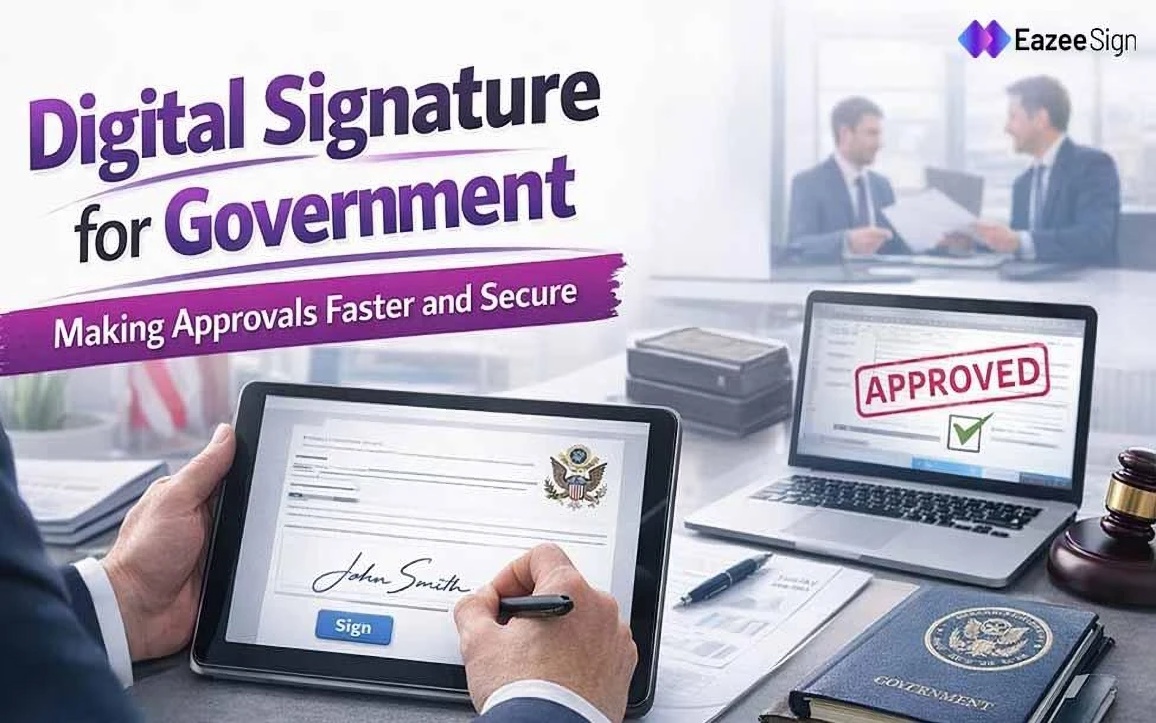
Paperwork is still a big part of government work. And honestly, it slows everything down more than expected.
Files move from one desk to another, approvals get delayed, and sometimes even a small document takes days to complete. This is exactly where digital signature government processes are starting to change things. Instead of relying on physical movement, departments are now shifting to digital signature online systems to handle documents faster and in a more controlled way.
It’s not just about speed. It’s also about clarity, tracking, and reducing unnecessary back and forth.
What is Digital Signature for Government Industry?
A digital signature is simply a way to sign documents electronically, but with proper security and verification in place.
In government use, it is applied to official approvals, permits, agreements, and tender documents. Instead of signing on paper, authorized users can sign documents digitally within a secure system.
These signatures are not just convenient, they are legally valid as well. Under the Information Technology Act, 2000, digital signatures can be used for official documentation, provided proper authentication is followed
Another important thing, digital signatures ensure that the document remains unchanged after signing. If anything is modified, it becomes detectable.
So it’s not just faster, it’s also reliable.
The Problem with Traditional Government Workflows
Government processes have always been document-heavy. That part hasn’t changed much.
What creates the real issue is how these documents move. Most approvals still depend on printing, signing, scanning, and then sending files again. This cycle repeats across departments.
Sometimes, one missing signature can hold a file for days. And no one really knows where the delay happened.
Manual tracking adds another layer of confusion. You depend on emails, physical files, or internal follow-ups. It works, but not efficiently.
This is why many departments are now looking for better, more reliable systems.
How Digital Signature Online Fits into Government Systems
Work is no longer limited to one office or one location. Government teams often work across departments, cities, and sometimes even remotely.
This is where digital signature online systems become useful.
Instead of waiting for physical files, a document can be uploaded, signed, and shared within minutes. A senior can approve something even without being physically present in the office.
Field officers can complete documentation on the go. Different departments can coordinate without delays.
The process becomes simple:
Upload – assign – sign – track
No unnecessary movement. No repeated follow-ups.
Key Benefits of Digital Signature for Government
There is a reason why the adoption of digital signature online is increasing. It solves real problems that departments deal with daily.
Some of the key benefits include:
- Faster approvals without physical delays
- Secure and tamper-proof documentation
- Reduced paperwork and printing costs
- Better transparency through tracking
- Easy collaboration across teams
Tracking becomes much easier because every action is recorded. You can see who signed, when they signed, and what stage the document is in.
Many departments are now adopting digital signature government solutions to simplify approvals and reduce manual workload in day-to-day operations.
Security and Compliance in Government Digital Signatures
Security is not optional in government work. It’s critical.
Digital signature systems are designed with multiple layers of protection. This includes encryption, authentication, and controlled access. Only authorized users can view or sign documents.
There is also a complete audit trail. Every action is recorded, which helps during verification or audits later.
Role-based access ensures that not everyone can edit or approve documents. Everything stays controlled and structured.
These systems are also built to follow legal and compliance standards, which makes them suitable for official use
Common Use Cases in Government Industry
Digital signatures are already being used across different areas of the government industry.
Some common use cases include:
- Tender approvals and contract signing
- Issuing licenses and permits
- Inter-department agreements
- Public scheme documentation
- Vendor onboarding and approvals
These are everyday tasks. And when they become faster, the overall system improves.
Legal Validity of Digital Signature for Government Use
Government documentation is sensitive. It’s not just about signing a file, it’s about whether that document will actually hold value when needed.
Digital signatures in India are legally recognized under the Information Technology Act, 2000. This law gives electronic records and digital authentication the same legal standing as physical documents, as long as the required procedures are followed
In simple words, a digitally signed document can be used for official approvals, agreements, tenders, and even compliance-related submissions. It is not treated differently just because it is digital.
There are specific sections under the law that support this. For example, electronic records are considered valid if they can be stored and accessed later. Similarly, if a signature is required, it can be fulfilled through an electronic signature method that follows government-prescribed standards.
Another important point is how authentication works. Digital signatures are not just typed names or scanned images. They are backed by cryptographic systems that verify the identity of the signer and ensure the document has not been altered after signing. If any change is made later, it becomes detectable.
For government use, this becomes even more important. Documents often move across departments, involve multiple approvals, and need to be verified at different stages. Without proper tracking and authentication, things can easily get messy.
This is where structured platforms come into the picture. Most departments currently operate under software solutions which provide complete legal compliance solutions. EazeeSign provides secure authentication and audit trails and controlled access features to ensure government documents remain protected from unauthorized access.
Teams can use existing systems which meet legal requirements to avoid the need for manual verification and physical signature processes. The solution creates better understanding among people while it boosts responsibility and makes entire procedure more dependable.
Conclusion
Government offices’ workflows are slowly moving away from paper. And honestly, it was needed.
Delays, missing files, and manual tracking were always part of the system. But now, with digital solutions in place, things are becoming more structured and easier to manage.
Adopting digital signature for government processes is not just about going digital. It’s about improving efficiency, transparency, and accountability at every level.
And once teams get used to it, going back to manual paperwork doesn’t really make sense anymore.